

Current status of maritime trade
The reality of recent years
Maritime transport has experienced different variations in recent years as, despite the availability of content, it has remained one of the best and most demanding forms of transport. Its capacity to load and reduce costs over the remaining available options has continued to develop but, throughout 2025, it is expected that the current situation at international level will stalled.
The data collected in the analysis of the UN on the sector of last September, they reflect that the maritime trade will only have grown by 0.5% in 2025 and there are several reasons that present as culpable of it.
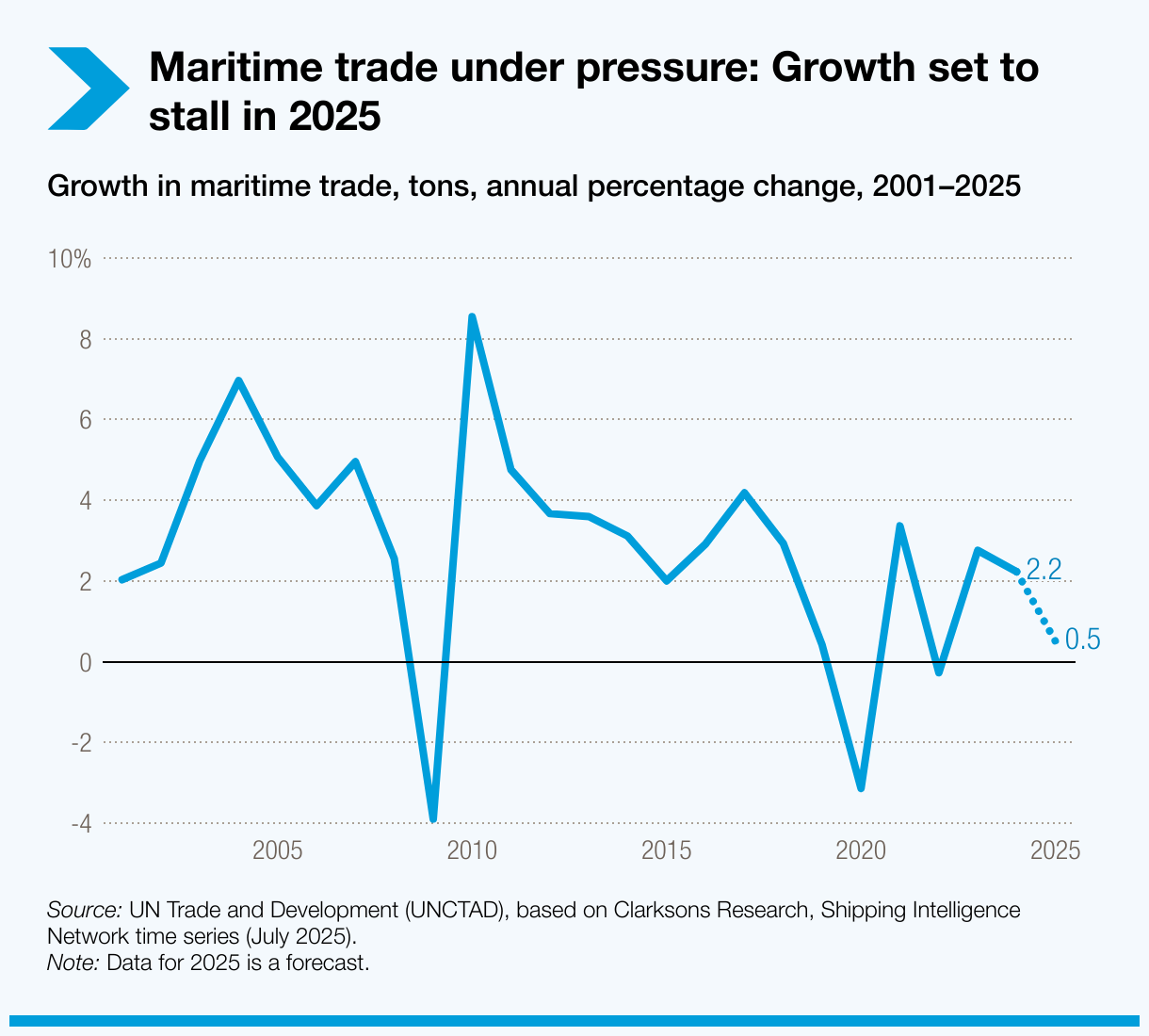
Since the recovery period caused by COVID, there have been different problems at the international level that have led to some collapse and regression within the commercial landscape. The uncertainty generated by tariffs in the United States (especially intensified in the first half of 2025) has spread over the years without even knowing what their outcome will be and the consequences that they could have, in addition to the different war conflicts and disputes between certain nations, has generated the need to look for safer alternative routes that avoid causing damage to ships, which is an increase in costs by being, most of them, longer routes with higher fuel costs and delays in arrival.
If it were little, we must add to all this the lack of awareness among the economic powers that eventually involve high interest rates and complications in economic recovery.
It is true that the port charges imposed last October between the United States and China have been repealed on November 10 following an agreement reached between the two top leaders of each country, which will mean the savings of millions of dollars for international trade and the delay of an even greater recess than is being produced.
Another reason for this stalemate is caused by the ecological transition that the sector needs. Current vessels continue to issue a disproportionate amount of greenhouse gases, and recycling is being sought to meet present environmental demands. All this represents a great investment for shipping companies that opens up a great opportunity for paradigm change over the concept of maritime transport.
New ships with efficient, more technologically powerful and more efficient fuels represent a similar adjustment in port terminals, causing a need for spending and investment by the institutions.
Maritime trade is at a standstill, but its capacity for growth and adaptability to the future will be the aspects that decide where it will be in the coming years and under what approach they will choose to do so.


